
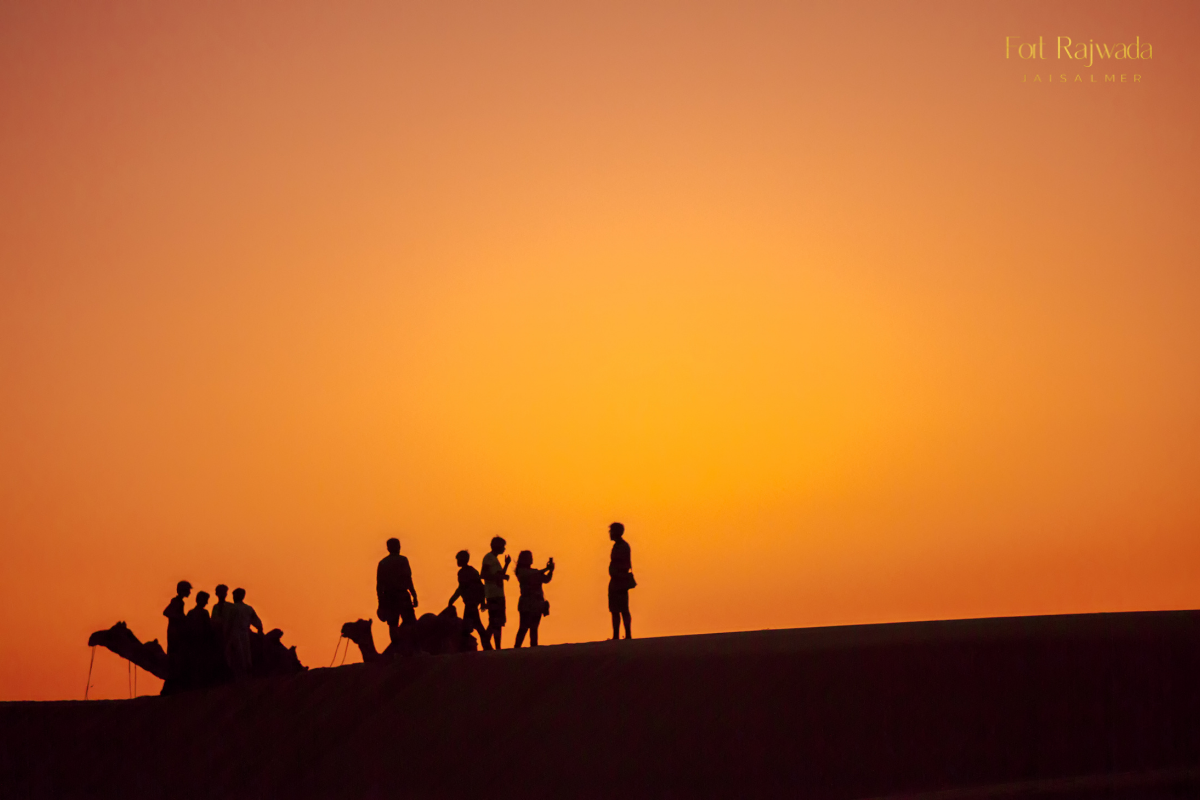
Sam Sand Dunes is the stretch of open sand most people picture when they imagine the Thar. It lies about 40 to 45 km west of Jaisalmer, roughly an hour by road, and it’s where nearly every desert safari, camel ride and overnight camp in the district happens.
The Dune belt is compact, around three kilometers long and a kilometer across, with ridges running between ten and forty meters high. That doesn’t sound like much on paper. Stand on top of one with flat scrub reaching the horizon in every direction and it feels considerably bigger.
We arrange this trip for guests most evenings through the winter, so what follows is the practical version. The drive, what to book, what things cost, and the mistakes that cost people their sunset.
Getting to Sam Sand Dunes
- The road west from Jaisalmer heads towards Sam village and Kanoi. Single carriageway, tarred, in reasonable shape the whole way. Expect loose gravel in patches, cattle wandering out near the villages and dust on everything. Any hatchback handles it. There are no tolls either, but remember to keep some money aside for the parking attendant at the far end.
- Most people hire a taxi and have the driver wait through the evening, and that’s the arrangement we set up for guests here. Agree the return timing before you leave. What you’re really paying for is the freedom to go when you want to, not when a driver with another booking wants you to. It also helps to ask for someone who knows the Sam belt properly. Being dropped at the first ridge, where four buses have just emptied, is a very different evening from being taken another three minutes down the road.
- Your own car works too. Leave by half three in winter and you’ll get there in good time. Keep it on the tarmac, though. Somebody attempts the sand every season, gets maybe ten meters in, then sits there for two hours while waiting for a tractor to come and haul them out.
- Buses do come out this way. The timings suit people who live along the route and nobody else, so unless you fancy your chances of getting back after dark, skip them.
- Motorbikes are another matter. Half the younger travelers we see have rented one, and the road west in November is among the better rides in Rajasthan. Coming home at nine at night on that same road, no streetlights, trucks and the odd cow, is less enjoyable.
- Reaching Jaisalmer in the first place is easier than the guidebooks let on. The airport here runs October to March, direct from Delhi and Mumbai, with Ahmedabad and Jaipur covering the connections. Travel outside that window and you fly into Jodhpur instead, which operates all year and sits four and a half hours away by road. Trains arrive direct from Delhi and Jaipur too. One caution though: the winter flights sell out, especially the week either side of the Desert Festival in February, so book those before you book anything else.
What the Drive Actually Looks Like?
- Something to square away before you set off. Sand does not start at the city limits. For the first forty kilometers you’re looking at brown scrub, wind turbines, the odd Khejri tree, and there’s usually a moment around kilometer twenty when somebody in the car asks whether they’re actually going to see any desert.
Camel Safari or Jeep Safari?
We’re asked this more than anything else. They do fairly different jobs, really.
| Camel Safari | Jeep Safari | |
|---|---|---|
Typical price |
₹400 to ₹1,800 per person |
₹1,000 to ₹2,500 per jeep |
| Duration | 30 minutes to 2 hours | 20 to 45 minutes |
| Pace | Walking pace, quiet | Fast and loud |
| Best for | Sunset, photography, atmosphere | Thrill seekers, teenagers |
| Young children | Fine on a short ride with an adult | Not advised under about 8 |
| Photography | Excellent | Far too rough to shoot from |
Doing only ONE? Camel, at sunset. That’s what people come out here for, it suits almost everybody, and it gives you the photograph you’ll still have on your phone a year later. If there are teenagers in the group after something faster, put the jeep at four and the camel at five. Reverse the order and the camel will feel like it’s barely moving.
Camping at Sam
More camps line this belt than any other dune area in Rajasthan. Some are excellent. Some are pretty rough.
The luxury end gives you a big tent, an attached bathroom where the hot water actually runs, heating or cooling depending on the month, and a cultural evening somebody has clearly thought about. Swiss tents are the mid-range standard and suit most travelers perfectly well. Budget camps are exactly what the name suggests: a tent, a bed, some sort of bathroom, dinner, a bonfire.
Whichever you pick, check three things first. Pull the location up on a map, because a surprising number of places sold as being in the dunes are sitting on flat ground several kilometers off. Ask whether the bathroom is attached and whether hot water is available at the hour you’ll actually want a shower, which is usually late. Then read the recent reviews and ignore the five-star ones from three seasons ago.
Do stay for the music in the evening. The performers are mostly from the Manganiyar and Langa communities of this region, and while the format has plainly been shaped for visitors, the repertoire itself is old and it belongs here.
What It Costs?
Nobody sells a ticket to Sam Sand Dunes. It’s open ground, and you pay for whatever you decide to do, which throws visitors who arrive looking for a counter.
| Item | Indicative price |
|---|---|
Camel safari, about 30 minutes |
₹400 to ₹800 per person |
| Camel safari, 1 to 2 hours | ₹1,000 to ₹1,800 per person |
| Jeep safari | ₹1,000 to ₹2,500 per jeep |
| Quad bike or ATV | ₹500 to ₹1,500 per slot |
| Sand boarding | ₹300 to ₹700 per session |
| Swiss tent camp, per night | ₹2,500 to ₹6,000 |
| Luxury camp, per night | ₹6,000 to ₹20,000+ |
| Walk-in dinner with programme | ₹400 to ₹900 per person |
| Parking | ₹50 to ₹150 per vehicle |
Rates may rise during the Desert Festival and across the December to January peak. Two bits of advice. Bring cash, because card and UPI work at the bigger camps and almost nowhere else, certainly not with a camel handler or the man collecting parking money. And settle the price and the length of the ride before you get on. Almost every complaint that reaches us started with an hour that turned out to be twenty minutes.
When to Go?
October through March. Days are comfortable, evenings turn cold enough that the bonfire earns its place, and the light is clean. Nights in December and January get close to freezing out on the sand, far colder than the afternoon gives any hint of, so pack for that.
April to June is hard going. Afternoons push past 45°C and the sand keeps throwing heat back at you well after dark. Early morning still works. Monsoon rain here is light and unreliable, the scrub turns green for a few weeks and the clouds can be spectacular, though you may lose the sunset altogether.
Whenever you come, be standing on the dunes an hour before it sets. The good light doesn’t last.
What to Wear and Carry?
Loose cotton or linen with your arms covered, shoes that close properly instead of sandals, and something to wrap over your face when the wind gets up, because the sand goes everywhere. Add a jacket in winter. The temperature drops the moment the sun does.
Take cash in small notes, water, sunscreen, lip balm and a power bank. Signal is spotty out there, workable near the camps and thinning quickly past them.
Common Questions
Is there an entry fee for Sam Sand Dunes? No. You only pay for the activities you pick.
How long do I need? Four to six hours for the evening, or stay the night if you’re camping.
Is it suitable for older travellers? Yes. A short camel ride with someone helping you mount is fine. Give the jeep a miss.
Can I do the dunes and Jaisalmer Fort on the same day? Easily. Fort and havelis in the morning, leave around half three, dunes by sunset.
Do I have to camp overnight? No. Plenty of guests come out for the sunset, dinner and the music, then drive back the same night.
Where to Stay?
Camping in the dunes is worth doing once. For the rest of a Jaisalmer trip, basing yourself in the city usually works out easier.
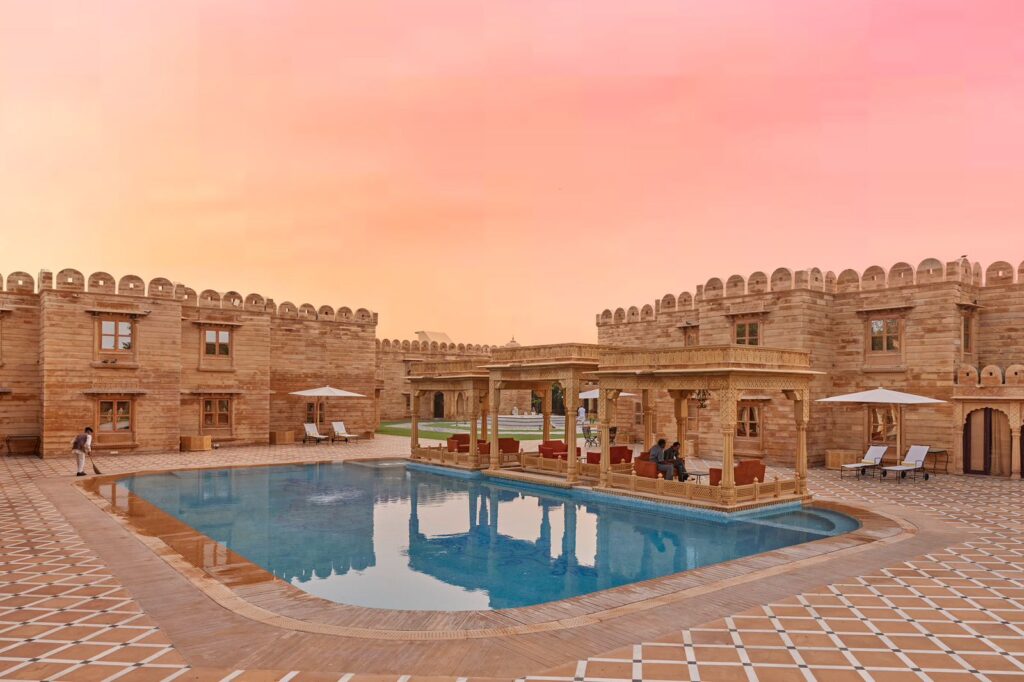
Fort Rajwada is a 5-star heritage hotel on the Jodhpur to Barmer Link Road at the edge of Jaisalmer, built in sandstone with carved facades and courtyards in the Rajputana tradition. It’s about 3.5 km from the railway station, roughly 12 km from the airport and around 45 minutes from the Sam dune belt, with 105 rooms and suites, a pool set among gardens, the Rohira Spa and five dining outlets.
The advantage is practical. Your luggage stays put, you come back at nine to a hot shower and a proper bed, and you watch exactly the same sunset as everyone who stayed out there. Our team can set up the safari, a camp night if you want one, and a car at both ends. Call +91-9828049555 or write to reservations@fortrajwada.com.
Safari and camp prices are indicative and shift with season and demand. Please confirm current rates before booking.