
Ask ten guests what they liked best about Jaisalmer and most will say the Fort, or the Dunes. Then about a third of the way through the answer, a good few of them mention the lake and get noticeably more animated about it.
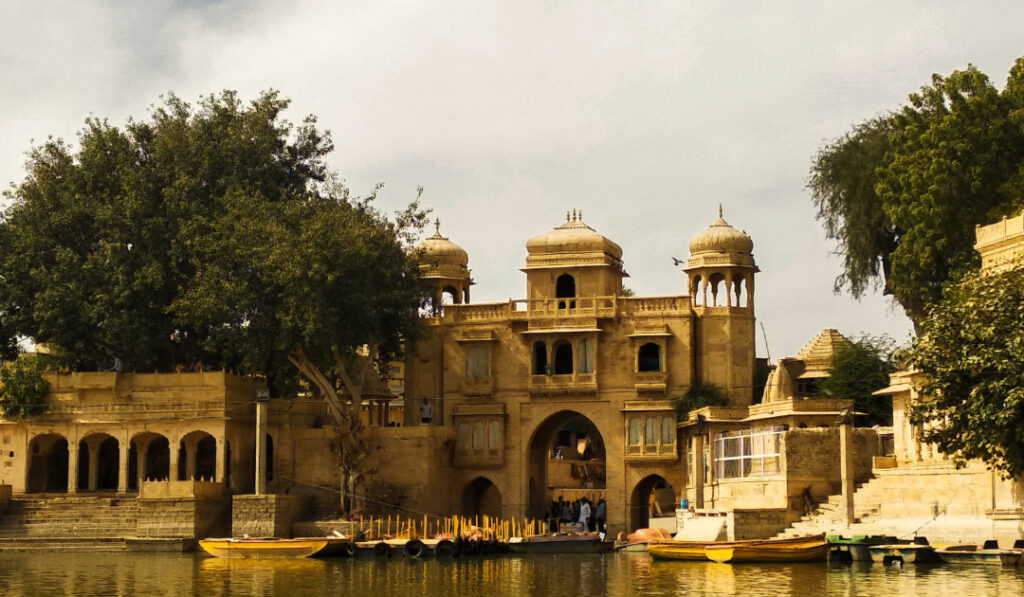
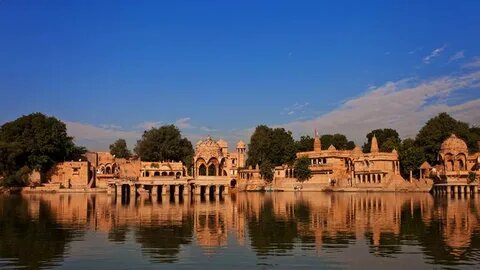
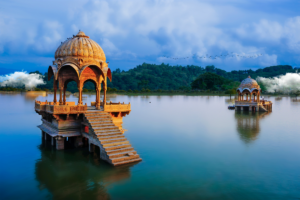
Gadisar sits at the South-Eastern edge of the Old City, a twenty-minute walk from the fort if you take it slowly. Sandstone pavilions stand out in the water, chhatris run along the banks, and if you arrive holding a packet of fish feed, you’ll have an audience of catfish at the bottom step before you’ve worked out where to sit. Early morning is when it’s at its best. The water stops moving entirely around six and doesn’t start again for a while.
Our front desk sends guests down there most days and hears about it over breakfast the next morning, which is where a fair bit of what follows comes from. History, the boating rates nobody online can agree on, when to actually turn up, and the things people wish they’d known first.
Why a Lake Exists Here at All?
- Jaisalmer went up in 1156 CE on a ridge in the middle of the Thar. There’s no river anywhere near it and no natural lake, and the groundwater is deep and often too brackish to drink. Cities in that position get by on wells and on whatever rain they can catch and hold onto. Gadisar was the catching and holding part.
- Whoever chose the site knew what they were doing. The land tilts gently inward towards this basin across a wide area, so rainwater drains here on its own. Rawal Jaisal’s men essentially deepened and banked up a process that was already happening by itself. The rebuild came later under Maharawal Gadsi Singh, usually dated to 1367 CE, and it’s his name that stuck. Jaisalasar was the older one. Some sources give Gadsi Singh credit for the whole project and not just the expansion, so treat any very confident version of this history with a bit of caution.
- For centuries this was the city’s drinking water, and that explains nearly every decision made around it. The banks were kept clean, access was watched, and what got built here were temples and shrines, not shops. When an entire population drinks from one place, that place turns sacred whether anybody plans it or not. Caravan traders working the Delhi to Sindh route would stop to wash and pray at the lake before heading up into the city.
- None of that applies now. Water arrives via the Indira Gandhi Canal, which is why the lake stays full through June instead of drying to cracked mud the way it used to in bad years.
Tilon Ki Pol and the Story Behind the Gate
- The archway you walk in under is Tilon Ki Pol, and it carries the best story of anything in Jaisalmer.
- Tilon was a courtesan, and she paid for the gate. The ruling family were not pleased about her name being attached to the city’s sacred water and made plans to have the structure pulled down. Her response was to install an image of Vishnu at the top of it, which turned demolition from an administrative decision into a religious problem, and the gate is still there. Nobody agrees on when any of this happened. Some accounts put it in the medieval period; others place it in the late nineteenth century with the Vishnu image going up around 1908.
- Everything else here is restrained by Rajasthani standards. Small temples to Shiva and Krishna and a handful of local deities, chhatris sitting out in the shallows, wide stepped ghats running down to the water. All of it in the same golden sandstone as the fort, which is why the place turns copper about twenty minutes before the sun drops.
Boating: What It Costs and Which Boat to Take?
Look up boating charges for Gadisar and you’ll get numbers ranging from ₹10 to ₹500, which helps nobody. The spread comes from some sources quoting per head, some per boat, and some being several seasons out of date.
| Boat type | Indicative charge |
| Pedal boat, 2 seater | ₹100 to ₹200, usually per person |
| Pedal boat, 4 seater | ₹200 to ₹400, often per boat |
| Row boat with boatman | ₹200 to ₹300 per person |
| Shikara or group boat | ₹300 to ₹500 per ride |
A ride runs 20 to 30 minutes. What actually governs the price is the board at the kiosk near the main ghat, so read that on arrival and check whether the figure is per person or per boat before handing anything over. Carry small notes. Digital payment at the counter is hit and miss.
Most couples end up in the two-seater pedal boat. Families with young children do better with a row boat, mainly so one parent isn’t pedaling the entire time while everybody else enjoys the scenery. Photographers, same answer, since you want both hands free and a boatman who can hold position. Two other things worth saying: put the life jacket on, and stay seated. Standing up in a pedal boat is how most people here end up wet.
Timings, Entry Fee and the Best Time to Visit
Nothing to pay at the gate. No ticket, no camera charge for ordinary photography.
Roughly 6:00 am to 8:00 pm is the working answer on access, and the reason you’ll find half a dozen different sets of hours quoted online is that the ghats are public space rather than a monument with a gate on it. Boating is about 8:00 am to 6:00 pm. Parking costs ₹20 to ₹50 for a car, collected on the spot by whoever is there, and in season it fills up an hour before sunset.
October to March is the season. Days sit somewhere between 20°C and 30°C, there’s often a thin mist over the water on December and January mornings, and the migratory birds are in. Summer afternoons are hard work with next to no shade on the ghats, though six in the morning in May is still a lovely thing.
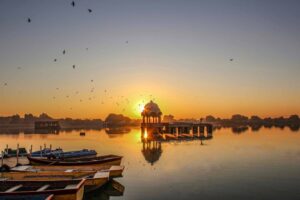
Given a choice of one, go at sunrise. Still water, first light catching the fort across the lake, maybe a dozen other people about. Sunset is the busier and warmer-toned version, with a good-natured crowd spread across the steps, and in December you want to be there 45 minutes ahead if sitting down matters to you. The one slot not worth bothering with is eleven to three. Flat light, bleached-looking stone, nowhere pleasant to wait it out.
Birds, Catfish and Other Residents
For a body of water in one of the driest parts of the country, it pulls in a surprising number of birds. Waterfowl, waders, cormorants, herons and egrets through the winter, peaking December to February. Kingfishers are here all year and are usually somewhere near the ghats if you look for them.
Now, about the Siberian cranes. You’ll see that claim repeated on plenty of sites and it’s almost certainly wrong. The species has effectively vanished from India, and what people photograph at Gadisar are demoiselle cranes.
Children tend to be more interested in the catfish anyway. Feed sells for ₹10 to ₹20 a packet near the entrance and the fish arrive in a solid mass within seconds of it hitting the water. Turtles are around too. No crocodiles, whatever somebody will inevitably tell you.
How to Reach Gadisar Lake?
Staying inside the walls? Walk it. About 1.5 km from the fort, twenty minutes or thereabouts, and the lanes you pass through are worth the time on their own.
Otherwise take an auto. They’re everywhere and cheap, just settle the fare before getting in. From the railway station it’s around 2 km, eight to ten minutes. From the airport, 13 to 17 km and roughly half an hour. Fort Rajwada is about 4 km out, so ten to twelve minutes by car.
However you come, you finish on foot. Vehicles don’t go past Tilon Ki Pol.
Common Questions Gadisar Lake
Is there an entry fee for Gadisar Lake?
No, and no camera charge either for normal photography.
How long should I spend there?
An hour to ninety minutes is comfortable, closer to two if you’re going out on a boat.
Can I swim in the lake?
No, swimming isn’t allowed. Ritual bathing at the ghats on festival days is a separate matter.
Is it good for children?
Very. The catfish and the pedal boats both go down well. Keep hold of smaller ones near the steps, which are unrailed along much of the edge and slippery where they meet the water.
Can I fly a drone?
Only with clearance. This is a border district with active military infrastructure, so check the DGCA Digital Sky rules as they currently stand and confirm locally. Somebody else flying one doesn’t mean it’s permitted.
What should I wear?
Shoes that stay on your feet, since the steps are uneven. Shoulders and knees covered, because the temples are in use. A jacket if you’re coming at sunrise in winter.
Where to Stay Nearby
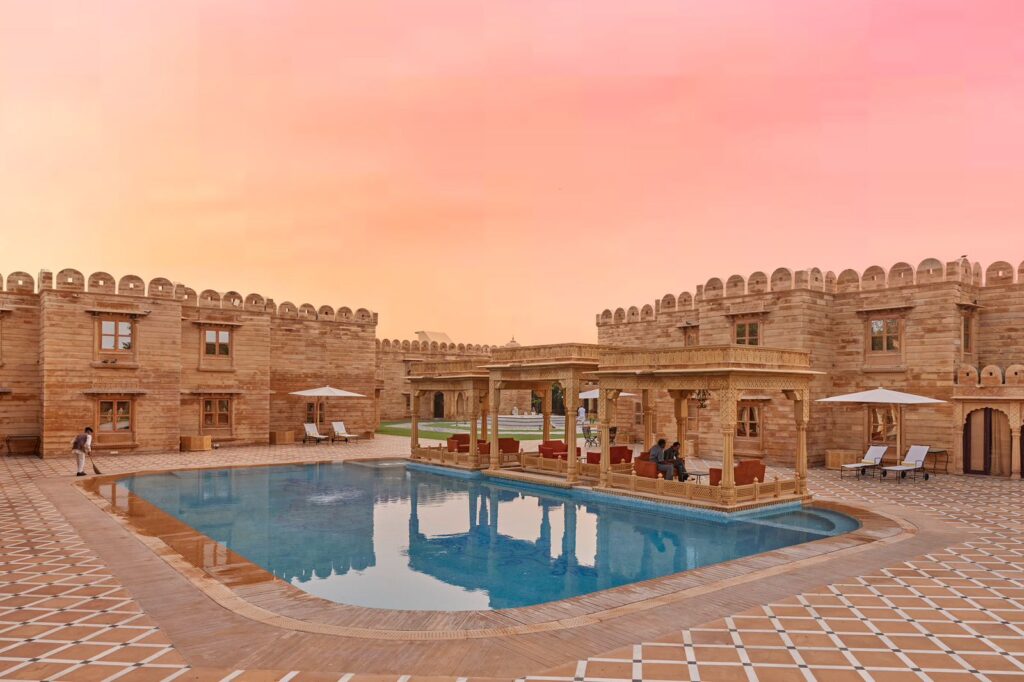
On foot, the guesthouses below the fort are nearest. If you’d rather have room to spread out, a pool and proper dining, Fort Rajwada is ten minutes away by car, and for a sunrise visit having someone able to put a car at the door at 5:45 am counts for more than the extra kilometer or two.
Our reservations team will sort that out and tell you what time to leave. +91-9828049555, or reservations@fortrajwada.com.
Boating charges and timings change from season to season. We go through this guide periodically, but do confirm the current position when you arrive.