
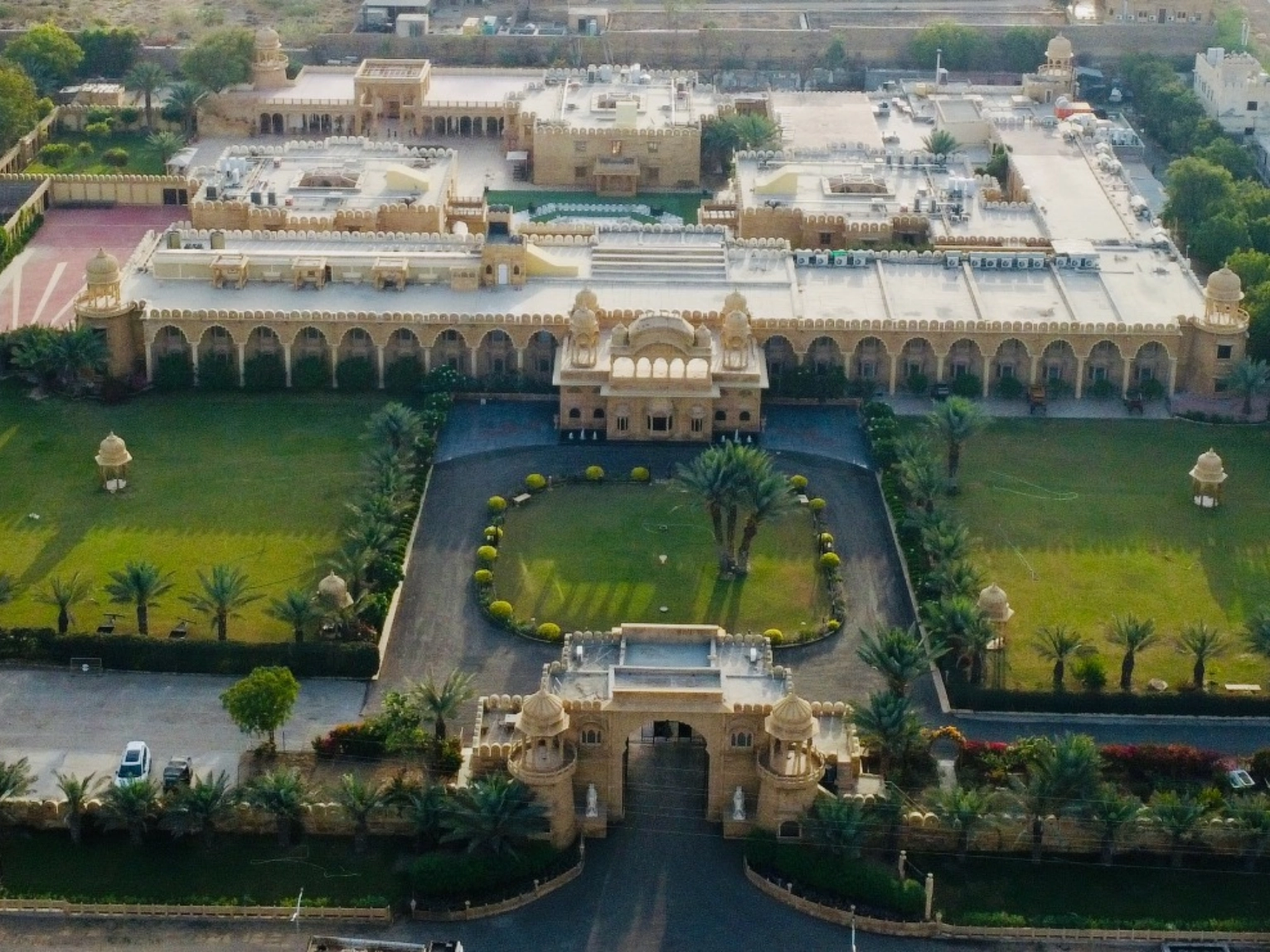
Fort Rajwada is a luxury palace hotel in Jaisalmer built in the manner of a traditional Rajasthani fort. Its architecture draws on centuries of Rajput building craft: hand-carved sandstone facades, latticed jharokha windows, arched gateways, open courtyards and royal gardens. Inside, hand-block printed textiles, antique woods and a suite inspired by the mirror-work halls of Rajput palaces carry the same craft into the rooms.
The hotel opened in 1998 and was reimagined in 2021. Through both chapters, the idea has stayed the same: a place that feels like a desert fort, built with the techniques that made Jaisalmer’s own fort and havelis famous. Here’s a walk through the property, and what each part of it draws from.
Why a fort, and why Jaisalmer
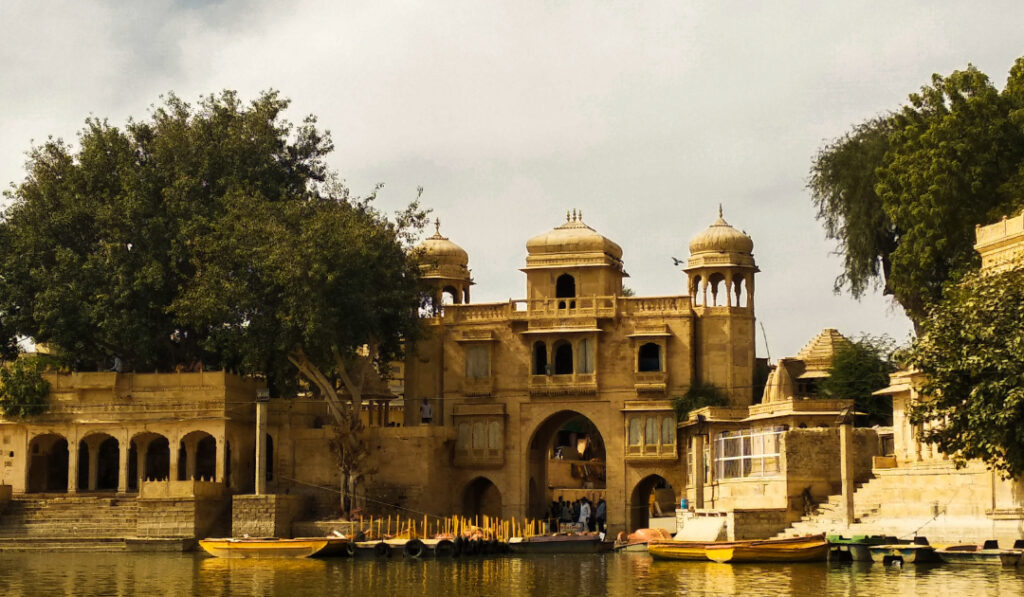
Jaisalmer’s identity is written in stone. Rawal Jaisal founded the city in 1156, and its fort, rising from Trikuta Hill, is one of the very few in the world that people still live inside. The walls, havelis and temples around it are almost all built from the same local yellow sandstone. That’s what gives Jaisalmer its name as the Golden City.
Building in this tradition comes with a particular vocabulary. Rajput forts were designed to impress and to protect from enemies. Rajput forts have high walls, heavy gateways and bastions on the outside, with courtyards, gardens and finely carved living quarters within. The desert shaped all of it. Thick stone walls hold the night’s cool well into the afternoon, carved screens filter harsh light and courtyards give a household a shaded heart.
Fort Rajwada uses this vocabulary intentionally . Fort Rajwada’s castle-like silhouette and fortified outline are meant to tell you, from the moment you arrive, which city you’re in.
The facade and the arched entrance
Your first view of Fort Rajwada is its facade, and it’s where you first experience Rajasthani craftsmanship. The walls are faced in hand-carved sandstone, with latticed jharokhas and arched windows set into them.
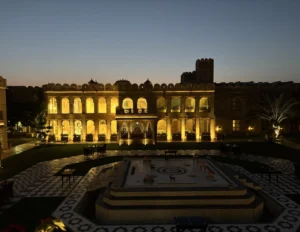
Sandstone suits this kind of work. It’s soft when freshly quarried, which lets a carver cut fine detail, and it hardens as it weathers. Jaisalmer’s stone carvers have worked this way for generations, passing patterns and techniques down through families. Look closely at any carved panel and you’ll see the marks of chisel work: floral borders, geometric repeats and the scalloped arches that run through Rajput design.
You’ll enter through an arched entrance, the hotel’s version of the pol, the great gateway of a Rajput fort. In the old forts, these gates were built for elephants and armies. Here, the arch does a gentler job, marking the moment you step from the city into a quieter, slower world.
Jharokhas and jaali
If one element defines Rajasthani architecture, it’s the jharokha and the jaali. It’s an enclosed balcony that projects from the wall, usually carved and topped with a small dome or curved roof, and often screened with a jaali, a stone lattice.
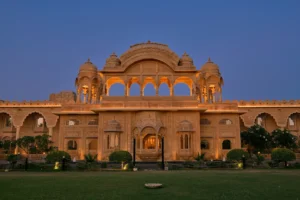
They’re as practical as they are beautiful. A jaali breaks harsh sunlight into soft, patterned shade, and it speeds up the breeze as air passes through the small openings, which helps cool the room behind it. In royal households, the screens also let the women of the palace watch courtyard ceremonies and street processions without being seen.
At Fort Rajwada, latticed jharokhas line the facades and frame the views. They’re at their best in the late afternoon, when low sunlight throws the lattice pattern across the floor and walls. Keep an eye out for it around golden hour.
The Central Courtyard
Every Rajput palace and haveli was built around a chowk, an open courtyard at the centre of the house. It was the household’s living room under the sky: shaded in the day, cool in the evening and the natural place for gatherings, music and ceremonies.
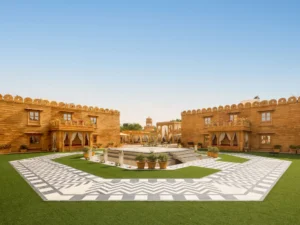
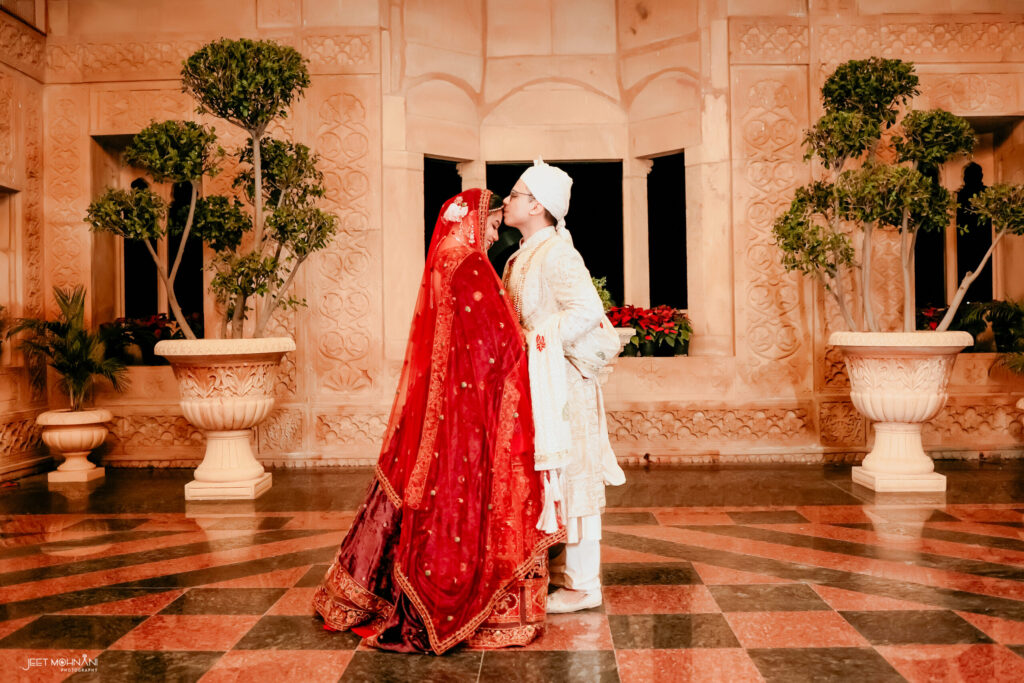
Fort Rajwada’s Central Courtyard keeps that role. It’s surrounded by the building’s arches and carved stonework, and it’s used today for some of the most important moments at the hotel, including intimate wedding pheras. In the evenings, it’s also where you’ll find folk music and cultural performances at their most atmospheric, with the sound bouncing softly off the stone walls around you.
Royal gardens: Rajabagh and Ranibagh
Royal households in Rajasthan valued gardens as much as courtyards. A bagh gave relief from the desert, with greenery, shade and space to walk in the cool of the evening. Many palaces had separate gardens for the king and queen, which is where Fort Rajwada’s garden names come from.
The hotel’s Rajabagh, the king’s garden, and Ranibagh, the queen’s garden, sit alongside the Central Lawn. They’re used for grand baraats and celebrations, and on an ordinary day they’re simply lovely places to sit. The Royal Palace Rooms with garden views look out over these well-kept grounds, and the swimming pool is set among the gardens with the fort-style architecture rising around it.
The Sheesh Mahal Suite and the art of mirror work
The sheesh mahal, or palace of mirrors, was the showpiece of many Rajput palaces. Craftsmen set thousands of small pieces of mirror and glass into plaster on the walls and ceilings, a technique often called thikri work. By the light of a single lamp, a whole room would glitter.
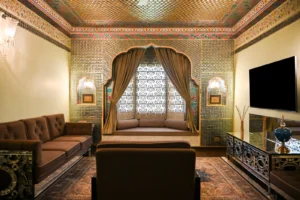
Fort Rajwada’s Sheesh Mahal Suite takes its name and inspiration from these royal halls. It’s one of the nine palace suites on the property, alongside the Rajwada Suite, the Jaisalmer Suite and the Family Suite. Each suite is named for a different part of the region’s story, and each brings heritage accents together with modern comfort.
Inside the rooms: textiles and antique woods
The craftsmanship doesn’t stop at the walls. Fort Rajwada’s rooms and suites are dressed in hand-block printed textiles, antique woods and arched windows.
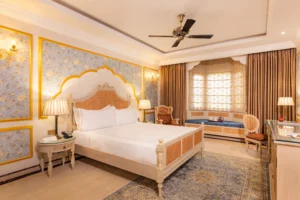
Hand-block printing is one of Rajasthan’s oldest crafts. Artisans carve a design into a wooden block, dip it in dye and press it onto cloth by hand, one impression at a time, lining each one up by eye. A single bedspread can take hundreds of impressions, and the slight variations between them are part of the charm. Paired with carved wooden furniture and the soft light from arched windows, the rooms feel like a Rajput home with modern comforts added.
Names with stories: the dining venues and spa
Fort Rajwada’s heritage is also carried in the names of its spaces, and each comes with a story.
Sonal and Roopal, the hotel’s two restaurants, take their names from a local legend associated with Fort Rajwada. It tells of twin sisters from Gujarat, Sonal with golden hair and Roopal with hair like silver, whose story links them to a royal household in the Pugal Bikaner region. Today Sonal is the fine dining restaurant, focused on Rajasthani cuisine, and Roopal serves multi-cuisine dining.
Pattu Bar is named after Pattu Kalalan, a woman remembered for serving liquor at royal mehfils, the evening gatherings of Rajasthan’s courts. Her name honours the people whose work shaped those evenings, welcoming guests and helping a night unfold.
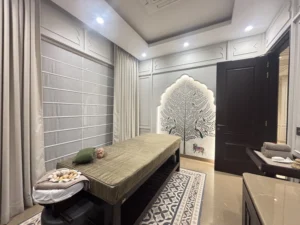
Rohira Spa takes its name from the Rohira tree, native to the Thar, whose crimson-red blossoms bring a splash of colour to the desert landscape.
Grand spaces for celebration
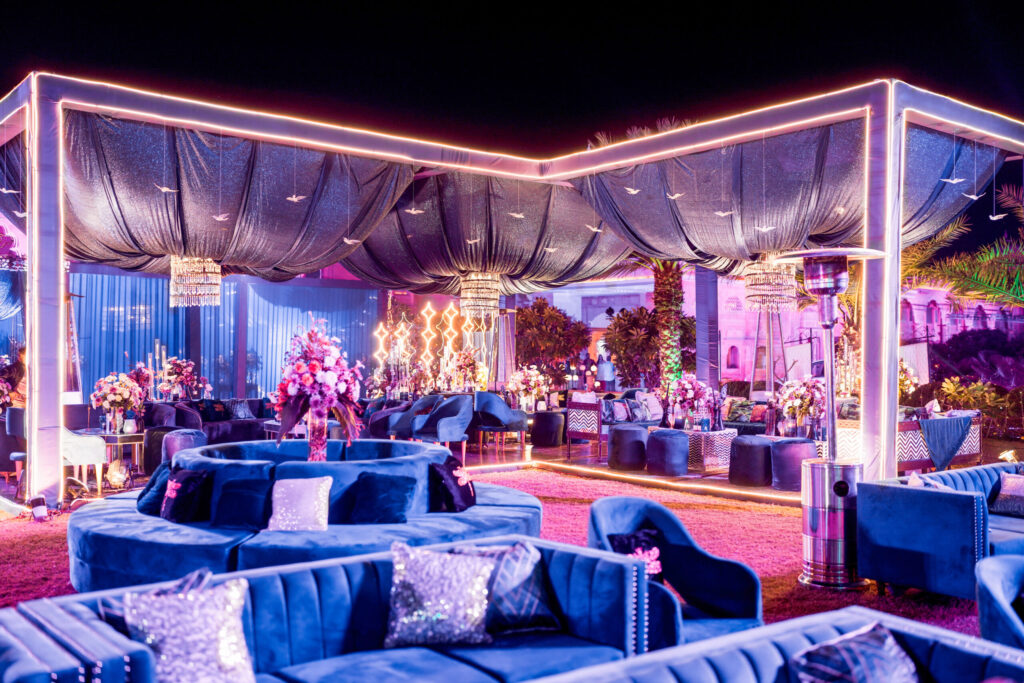
Rajput palaces were built for gatherings as much as daily life, with durbar halls and open terraces for celebrations. Fort Rajwada carries that tradition into its event spaces. Ganga Villas, the hotel’s Imperial Rajasthani ballroom, hosts up to 300 guests. The open-air Fort View Banquet is framed by Sonar Quila, Jaisalmer’s golden fort, and it offers one of the finest fort views from any hotel in the city.

What you’ll see at Fort Rajwada, at a glance
| Element | The tradition behind it | Where to find it |
| Carved sandstone facades | Jaisalmer’s stone-carving families | The exterior walls |
| Arched entrance | The pol, the gateway of a Rajput fort | The main entrance |
| Jharokhas and jaali | Projecting balconies and stone lattice for shade and airflow | The facades and windows |
| Courtyard | The chowk at the heart of every palace and haveli | The Central Courtyard |
| Royal gardens | The king’s and queen’s gardens of Rajput palaces | Rajabagh, Ranibagh and the Central Lawn |
| Mirror work | The sheesh mahal halls of royal palaces | The Sheesh Mahal Suite |
| Hand-block textiles | One of Rajasthan’s oldest printing crafts | The rooms and suites |
| Named venues | Local legends and court life | Sonal, Roopal, Pattu Bar and Rohira Spa |
Seeing it at its best
The architecture changes with the light, so give yourself time to see it at different hours. Early morning is quiet and soft, and it’s ideal for photographs of the facade. In the late afternoon, the jharokhas throw their best shadows, and the sandstone starts to glow. After dark, the lit arches and the courtyard during a folk performance are worth staying up for.
Three nights is the right length for a stay. It gives you a full day at Jaisalmer Fort and the havelis of Patwon ki Haveli and Salim Singh ki Haveli, where you can see where Fort Rajwada’s craft traditions come from, an evening out at the Sam Sand Dunes and unhurried time at the hotel itself. If you’re curious, Kuldhara and its local legend make a good short trip. Fort Rajwada is 12 km from Jaisalmer Airport, and there are direct flights from Mumbai and Delhi in season, with strong road and rail links via Jodhpur, Jaipur and Ahmedabad.
Frequently asked questions
What architectural style is Fort Rajwada built in?
Fort Rajwada is built in the style of a traditional Rajasthani fort, drawing on Rajput architecture. Its features include hand-carved sandstone facades, latticed jharokhas, arched windows, an arched entrance, a central courtyard and royal gardens.
What is a jharokha?
A jharokha is an enclosed balcony that projects from the wall of a building, typical of Rajasthani architecture. It’s often screened with a carved stone lattice called a jaali, which filters sunlight and helps cool the room behind it.
When was Fort Rajwada built?
Fort Rajwada opened in 1998 and was reimagined in 2021, keeping its fort-inspired architecture at the heart of the redesign.
What is a sheesh mahal?
A sheesh mahal is a palace hall decorated with small pieces of mirror and glass set into plaster. Fort Rajwada’s Sheesh Mahal Suite takes its name and inspiration from these royal halls.
Where do the names Sonal, Roopal and Pattu come from?
Sonal and Roopal come from a local legend of twin sisters from Gujarat, one with golden hair and one with silver, linked to a royal household in the Pugal Bikaner region. Pattu Bar is named after Pattu Kalalan, a woman remembered for serving liquor at royal mehfils in Rajasthan.